How (Not) To Ruin Your Marriage In Isolation
By: Ted Harro
Isolation = Marriage Exposure Therapy?
“My wife said she would have me for better or for worse,” our friend, Ed, said after he retired. “But not for lunch.”
The same could apply for marriage during social isolation. After looking forward to time together on the weekends for so long, you now wonder just how long this marriage exposure therapy is going to last. And whether you’ll make it through.
Then, add the kids. Oh my. The kids. You love them, but you’d like to love them at a bit more of a distance. Behind the protective screen of a school teacher and maybe a coach.
How to turn your marriage into a dumpster fire, if you’re into that kind of thing
Since we’re all encouraged to use our imaginations more while in social isolation, let’s play a little make-believe game. Let’s say for fun that you wanted to create a life-sucking, dumpster fire marriage during this crisis. I’m not sure why you’d want to do this. Maybe you dig misery. Maybe you’re a Cleveland Browns fan.
Here’s what you’d do. You’d start with the circumstances of your everyday, socially isolated marriage. That’s right, you don’t have to go anywhere special to start the dumpster fire. There’s plenty of dry tinder and more than a few sparks to ignite a stinking mess in anyone’s normal life, especially in social isolation.
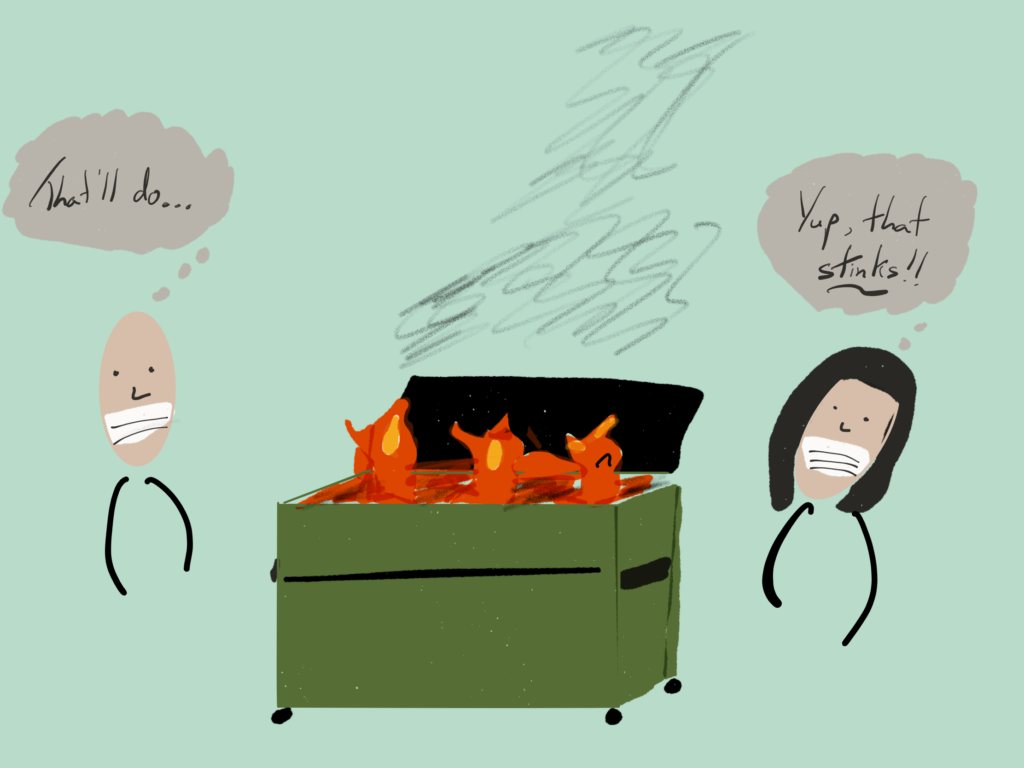
A dumpster fire marriage
Maybe your spouse does something mildly thoughtless. You’ve been working all day in the spare bedroom, on video call after video call. People at your workplace are freaked out and sad about the freefall otherwise known as your industry. You’ve been trying to hold them together and hold yourself together. Three times today – three times! – your kids have barged in on an important meeting, distracting you and giving your colleagues great screen shot material to post on Slack.
You come out of the bedroom worn out and without your usual 20 minute commute to change gears. As soon as you clear the threshold of your “office,” your spouse stands there, arms extended, child squirming.
“It’s your turn.” A curt look, a heel turn, and out the door your partner goes.
The stories we tell ourselves
It’s right then that the spark can be lit for a dumpster fire marriage. You can start by telling yourself false stories about your partner, your marriage, yourself, and God. Oh, I know you don’t think you do this. But we all do it. These are the conversations we have with ourselves in the shower or in the car. They’re the chats we have with our bros or girlfriends, the text strings we’d rather our spouse not see.
It might go something like this. “I can’t believe that. She really doesn’t get it, does she? I’m killing myself to be sure we can make our mortgage payments and she acts like I’ve been at the gym all day. And then she wants to keep ordering more stuff for her and the kids to do. Does she have any idea what I’m going through? I’m all alone.”
Meanwhile in the back room, she’s having her own private conversation. “He has no idea what it’s like to go from being a career woman to being a homeschool mom overnight. Who knew we were raising little terrorists? All day long, I’m in a wrestling match of wills with our oldest. We’re lucky I haven’t done something we all regret. Then he comes out of that room and gets to be the ‘fun parent.’ Really? I’m so alone.”
You can probably see how that story you’re telling yourself might shape how you think and feel for at least a few hours that night and the next day. Rehearse that story for a while and it will make its way into your behavior. It will fan the early flames of the dumpster fire.
Stories get reinforced by habits and relationships
Pretty soon, you’ll start to develop habits of thought that take the first flames into a solid blaze. Rebecca DeYoung tells how habits develop like snow tracks when you go tubing after a big snowfall. At first, it takes a while to develop a track through the snow for you to slide down the hill. But once you establish a track, your tube is attracted to that line down the hill so much that it’s virtually impossible to get out of that track.
That’s how habits are – both good and bad. At first, they’re small and not very strong. But if you keep practicing them, they become ruts. We all know that it’s hard to get out of a rut.
If you habitually tell yourself that your wife is a crabby, ungrateful, irresponsible person, you just might start to avoid her. You might find ways to stay in your office even more and to withdraw into another season of NFL reruns.
If you tell yourself that your husband is a selfish jerk and that you probably made a big mistake by marrying him – or at least having kids with him – you might start keeping score about who does more to care for the kids. Your story of loneliness and unhappiness could lead to escaping into shopping or alcohol or binge watching the favorite show that reinforces your storyline.
To make your smoking dumpster fire erupt into an inferno, surround yourself with friends who will reinforce your negative storyline. Make them be friends who are all in the same situation you are. Have them tell you that you’re right, that your partner is a horrible person and your biggest mistake.
That’ll do it. Stand back and watch the bonfire.
How to change the story
It doesn’t have to be this way.
Let’s rewind the tape. Your real life in isolation will involve squirrely kids and rearranged schedules and financial stresses. There’s no escaping that. You will emerge from your home office into what feels like a war zone – or be the one who has to live in that war zone every day. All day. Trying hard not to strangle someone.
But you can interrupt the pattern. Start by changing the story. “We’re all doing the best we can. This is hard for each of us. We’re in this together and our job is to stay together, to depend even more on each other.”
Then work the habits. For instance, one friend of mine makes it his goal to do one loving act each day for his wife. Something that she interprets as loving. What you do doesn’t have to be a grand gesture. It can be as simple as looking your spouse in the eye and saying, “I love you” or “Go ahead and take a run outside. I can see you need a break.” But it can be as creative as you want. The point is to be intentional, to show your partner that they’re seen, that you’re there for them.
For the cherry on top, find a friend to share this challenge with. Compare notes. Engage in friendly competition about who can love their spouse better. Cheer each other on.
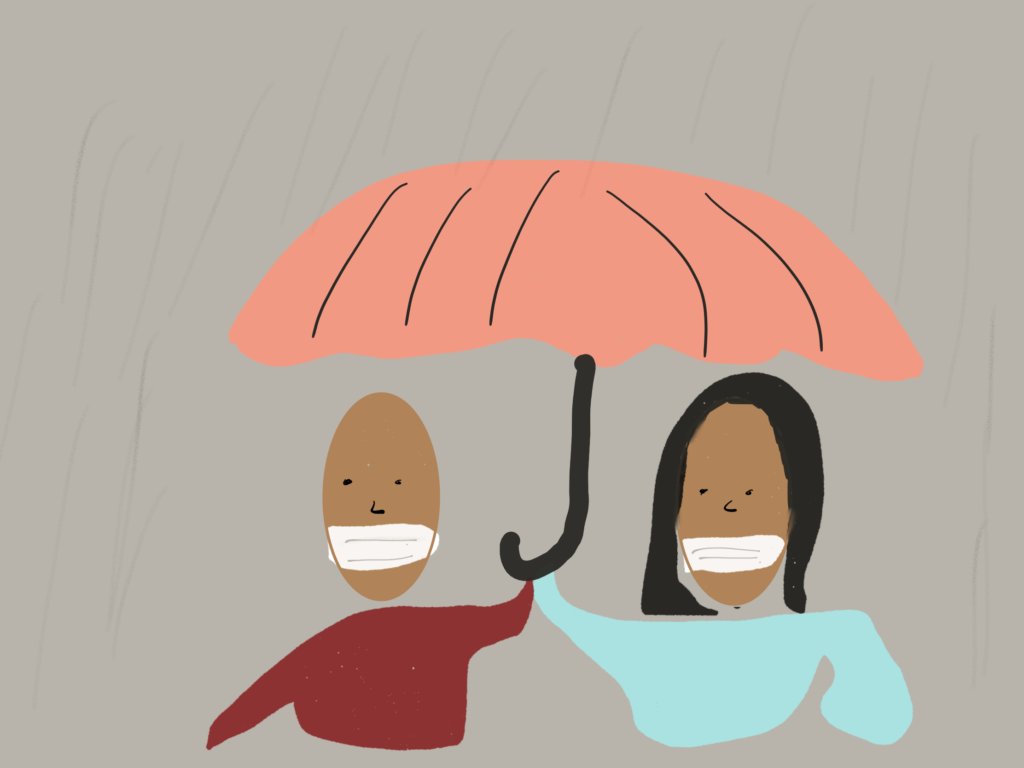
Your marriage can work even in isolation
This is how a real marriage in a real, unavoidable situation shines instead of descending into a dumpster fire.
Maybe it can be this way.
This week:
- Notice the stories you tell yourself about your life and your marriage. Don’t judge yourself. Just notice.
- Notice the habits and relationships that reinforce your stories. Again, just notice.
- Ask God in what ways He’s inviting you to change the story of your marriage while in isolation.


Add Comment